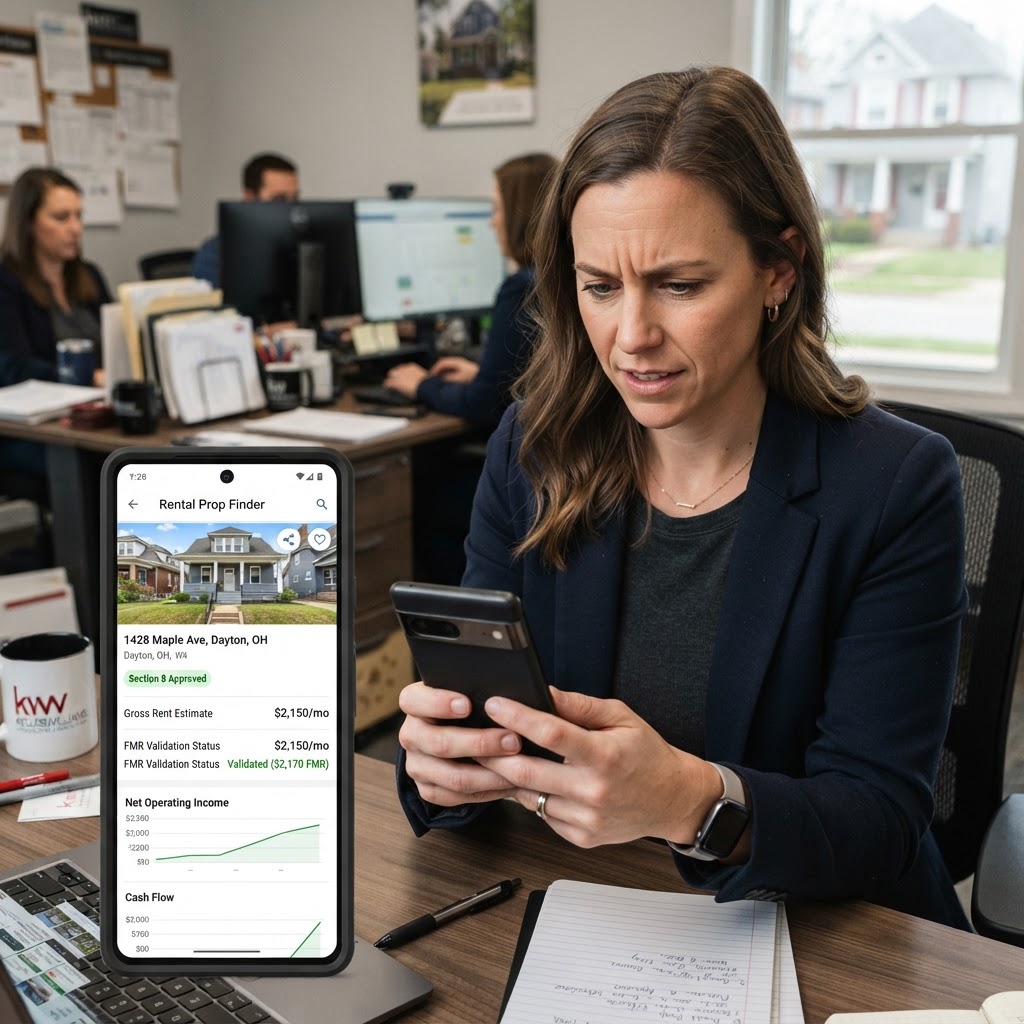
Understanding the Section 8 Income Landscape
For real estate professionals working with investor buyers, the Section 8 Housing Choice Voucher program presents a unique value proposition. It offers the potential for reliable, government-backed rental income—often a primary draw for investors looking for stability in volatile markets. However, the success of these acquisitions hinges on precise income forecasting. Relying on anecdotal rent estimates is a shortcut to poor investment decisions. Instead, agents must master the use of Fair Market Rent (FMR) data as the foundational layer of their due diligence process.
FMR represents the payment standards established by HUD, which dictate the maximum rental assistance provided for specific unit sizes in a designated area. When evaluating a potential acquisition, these figures serve as a critical reality check. By cross-referencing property performance against established FMR benchmarks, you can quickly filter out listings that lack viable cash flow potential, ensuring your time is spent on assets that align with your client's long-term financial objectives.
Why FMR Data is a Realtor's Best Friend
Many investors approach Section 8 properties with the misconception that they can set rents based on aspirational market rates. In reality, the voucher program is bound by the payment standards set by local public housing agencies (PHAs). When using fair market rent data for section 8 investment property analysis, you gain immediate visibility into the income ceiling for a specific property. This prevents the common trap of overestimating potential gross rental income during the acquisition phase.
Beyond simply validating rent, this data helps manage investor expectations. When you provide concrete, data-backed evidence of what a voucher will cover in a specific zip code, you position yourself as a strategic advisor rather than just a transaction facilitator. This level of transparency is essential for building trust and retaining investor clients over the long term, as demonstrated in The Retention Engine: Using Automated Rental Health Reporting to Turn One-Time Investors Into Long-Term Clients.
The Anatomy of an FMR-Based Analysis
Effective analysis requires more than just looking at the top-line FMR figure. Realtors must learn to account for the gap between market-driven rent and subsidized rent. If the FMR for a three-bedroom unit in a neighborhood is lower than the projected market rent for a private-pay tenant, the property may struggle to deliver the expected yield. Conversely, properties where FMR aligns closely with, or slightly exceeds, local market rates often present the most compelling risk-adjusted opportunities.
To perform this correctly, agents should integrate this analysis with broader market metrics. Understanding how a specific neighborhood's expense ratio influences net operating income is vital. For a deeper dive into managing these operational variables, consider reviewing The Precision Advantage: Calibrating Investor Cash Flow Forecasts with Micro-Market Expense Benchmarking to ensure your model accounts for the nuances of local property taxes and maintenance costs.
Navigating the Subsidy Gap
It is crucial to recognize that FMR is not a guarantee of payment; it is a ceiling for the voucher portion of the rent. If a landlord attempts to charge above the local payment standard, the tenant must often cover the difference—a scenario that can increase the risk of delinquency. As a realtor, your job is to identify properties where the rental price is fully optimized within the local PHA payment standards to minimize this risk.
This process involves evaluating the property's condition and amenity set against the local competitive supply. If the property lacks the necessary features to qualify for the higher end of the FMR spectrum, the rental potential will be lower. Using a platform that provides data on local rental trends allows you to quickly assess whether the property in question is positioned to capture maximum allowable rent.
Developing a Workflow for Investor Clients
Integrating FMR checks into your standard workflow turns a manual, time-consuming task into a streamlined process. Start by filtering your search for properties that are located in high-demand, low-vacancy areas. Once you have a shortlist, apply the FMR data to each candidate to determine if the numbers support the acquisition. This workflow ensures that every property you present to an investor has been vetted for its income reliability.
By systematizing this, you can provide investors with a clear 'yes' or 'no' on a property in minutes rather than hours. This efficiency is exactly what distinguishes a high-producing investment realtor from the competition. You are providing a service that mitigates risk at the front end, which is the most valuable stage of the investment lifecycle.
How Rental Prop Finder Enhances Your Analysis
Rental Prop Finder is designed to bridge the gap between raw data and actionable investment insights. Our platform provides comprehensive tools that allow you to analyze cash flow, cap rates, and DSCR with built-in access to current rental market data, including Section 8 benchmarks. Rather than manually hunting for PHA payment standards, our tools aggregate the data you need to make rapid, informed decisions for your clients.
Our property feed updates daily, ensuring you are always looking at the freshest opportunities. By using our stress-testing features, you can simulate how different rent scenarios—including those restricted by FMR—impact the overall viability of the investment. This helps ensure that your clients are purchasing assets that offer realistic pathways to their financial goals, independent of market speculation.
Final Recommendation for Investor-Focused Agents
Do not rely on gut instinct or seller-provided pro formas when evaluating Section 8 opportunities. Always anchor your analysis in verified FMR data. By prioritizing this foundational layer of due diligence, you protect your clients' capital, demonstrate your professional value, and build a reputation for reliability in the investment community. Start incorporating these rigorous data standards into your next property search to see the difference it makes in your closing rate and client retention.
Analyze a Property for Your Client
Disclaimer: Rental Prop Finder provides analytical tools and market data for informational purposes only. All financial projections, including rent estimates and potential yields, are estimates based on available data and do not constitute guarantees of future performance. Investors should conduct their own independent due diligence and consult with financial or legal advisors before making any investment decisions.